Weiqi Beginner's Guide
Introduction
Weiqi, also known as Go or Baduk, is one of the world's oldest strategy games, yet its appeal has never faded. The rules are simple enough to learn in minutes, but the game's depth keeps players engaged for a lifetime. Many people are drawn to Weiqi because it rewards patience, creativity, and long-term thinking rather than memorization or quick reflexes. It offers a quiet, thoughtful kind of competition where each move shapes the entire board, and every game becomes its own story.
Board and Stones
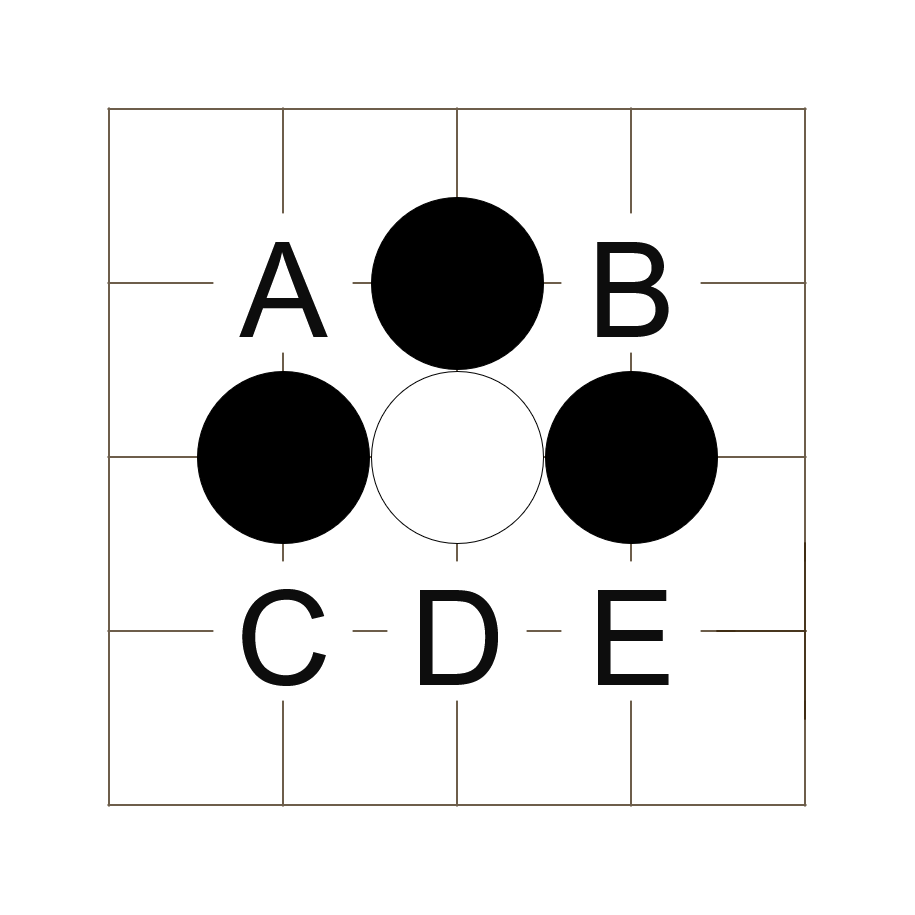
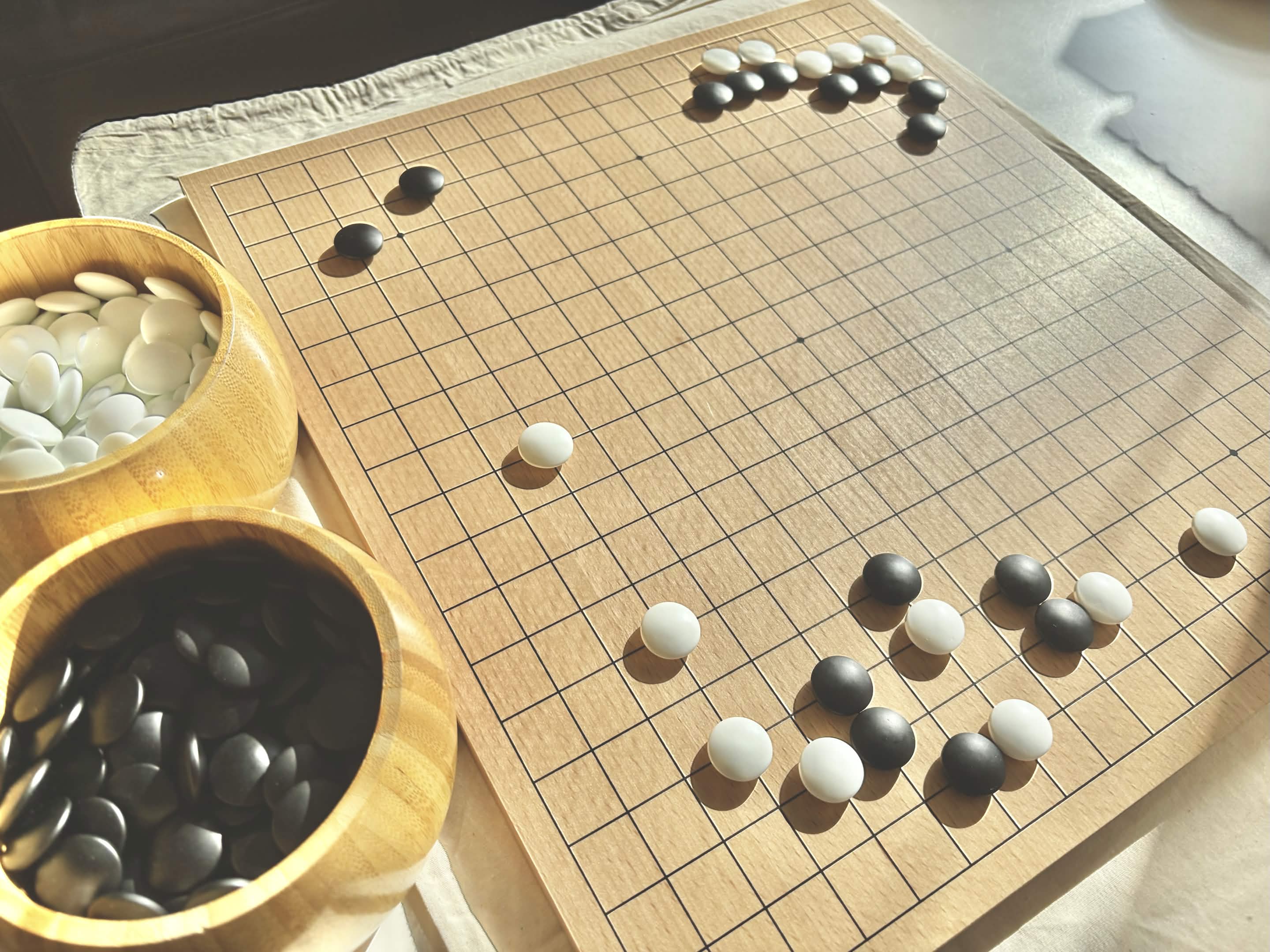
Weiqi is played on a grid of intersecting lines, most commonly the full 19x19 board, though beginners often start on smaller 9x9 or 13x13 boards to learn the fundamentals. Black and white stones are placed on the intersections rather than inside squares, and once a stone is placed, it stays on the board unless it is captured. Stones that touch along the lines form groups and share liberties, the empty points that keep them alive. This simple setup creates a surprising amount of strategic possibility, as every stone influences the shape of the board.
Gameplay
Players alternate placing one stone at a time, with Black moving first. After each move, any stones that no longer have liberties are removed from the board, creating a natural rhythm of expansion, conflict, and resolution. The early game tends to be open and exploratory, with players staking out broad areas. As the board fills, the focus shifts to tactical fights, life-and-death struggles, and finally the precise endgame where every point matters. A player may pass when no profitable move remains, and when both players pass in succession, the game ends.
Goal
The aim of Weiqi is to control more territory than your opponent. Territory consists of empty points surrounded by your stones, and captured stones also contribute to your score. Throughout the game, players balance the desire to secure solid territory with the need to build influence and maintain efficient shapes. Good play often involves choosing moves that serve multiple purposes at once, strengthening your own position while limiting your opponent's options. When the board is settled, the player with the greater total of territory and captures wins.
Life and Death
A central idea in Weiqi is whether a group of stones is alive or dead. A living group is one that cannot be captured, usually because it contains two separate internal liberties known as eyes. A dead group, even if still on the board, is one that can be captured with correct play. Some shapes resemble eyes but can be filled by the opponent; these are false eyes, and recognizing them is an important skill. Studying life-and-death problems, known as tsumego, helps players learn to read ahead and understand which groups can survive and which cannot.
Rules
Although the rules of Weiqi are straightforward, a few details are essential. The ko rule prevents a player from recreating the exact same board position immediately, stopping infinite loops and forcing players to fight ko battles with threats elsewhere on the board. Suicide is not allowed unless placing a stone would immediately capture opposing stones and restore liberties to the group. When both players pass, the game ends and the board is scored. Different rule sets vary slightly in how they count points, but the flow of the game remains the same across all traditions.
Example
A 9x9 board is an excellent way to learn because it keeps the game compact and easy to follow. Battles resolve quickly, and concepts like liberties, captures, and life-and-death become clear without the complexity of a full-sized board. Beginners can focus on reading short sequences and understanding basic shapes before moving on to larger boards. This section is a good place to include a simple example game or diagram later, showing how a small board develops from opening moves to final scoring.
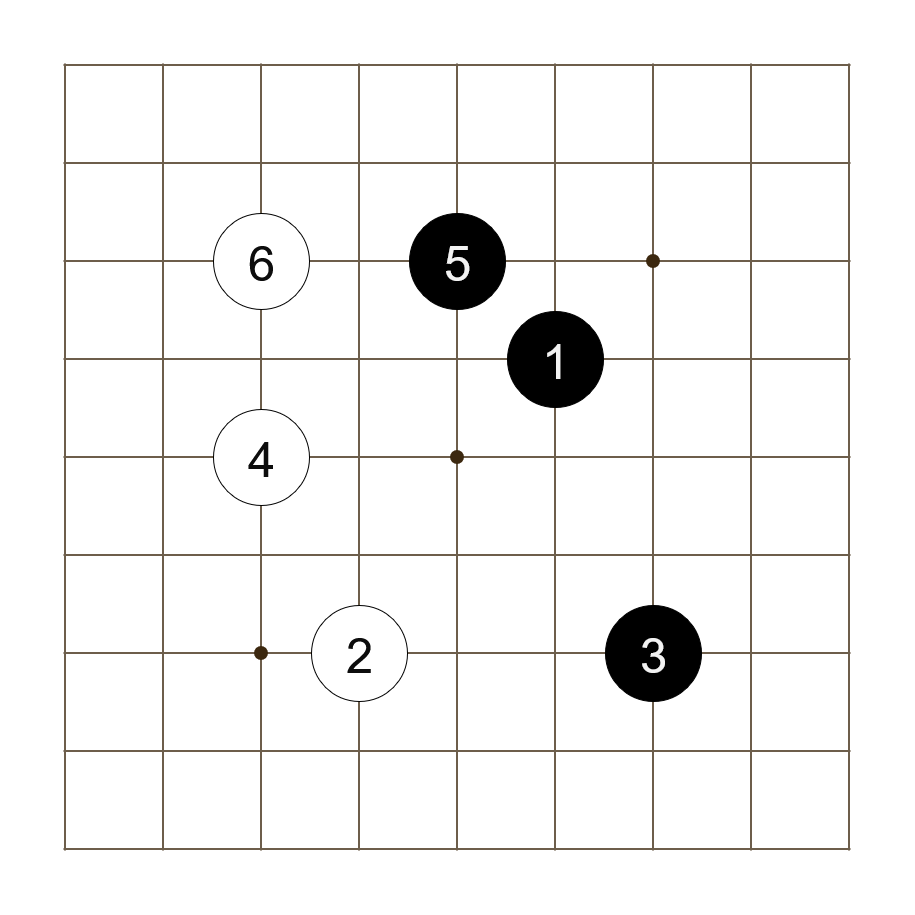
Black is aiming to control a big territory to the right. White is working on the left side.
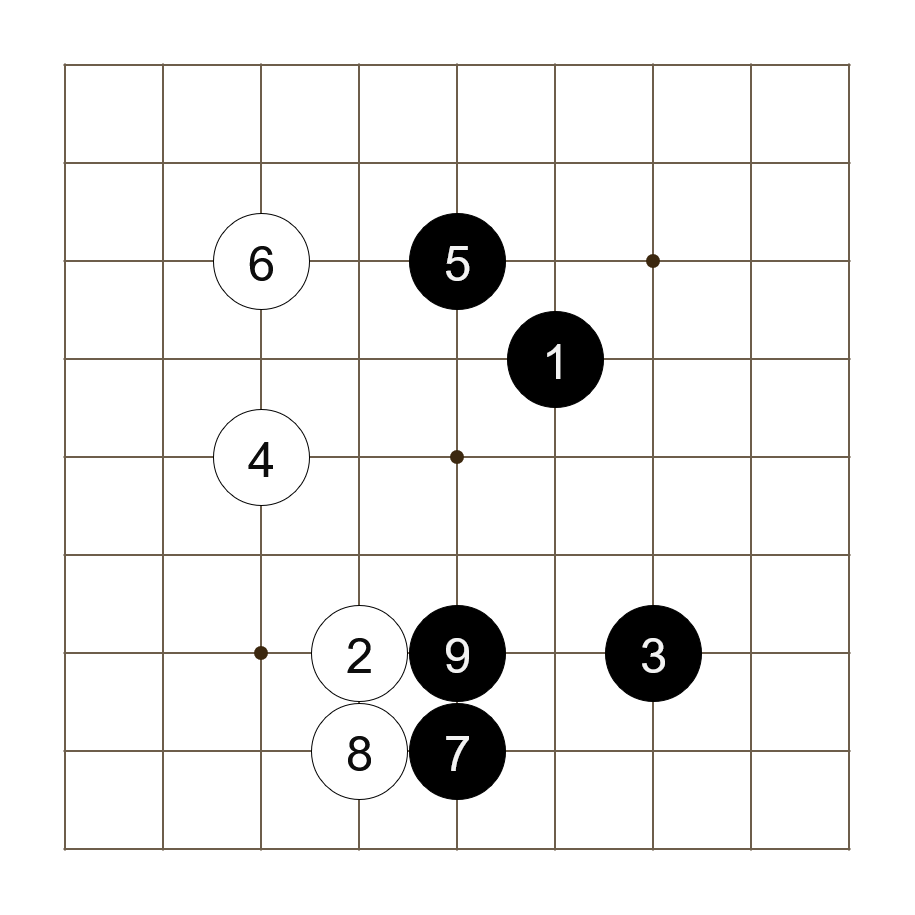
Black chooses to expand their own territory and reduce the white territory. White defends and black reinforces.
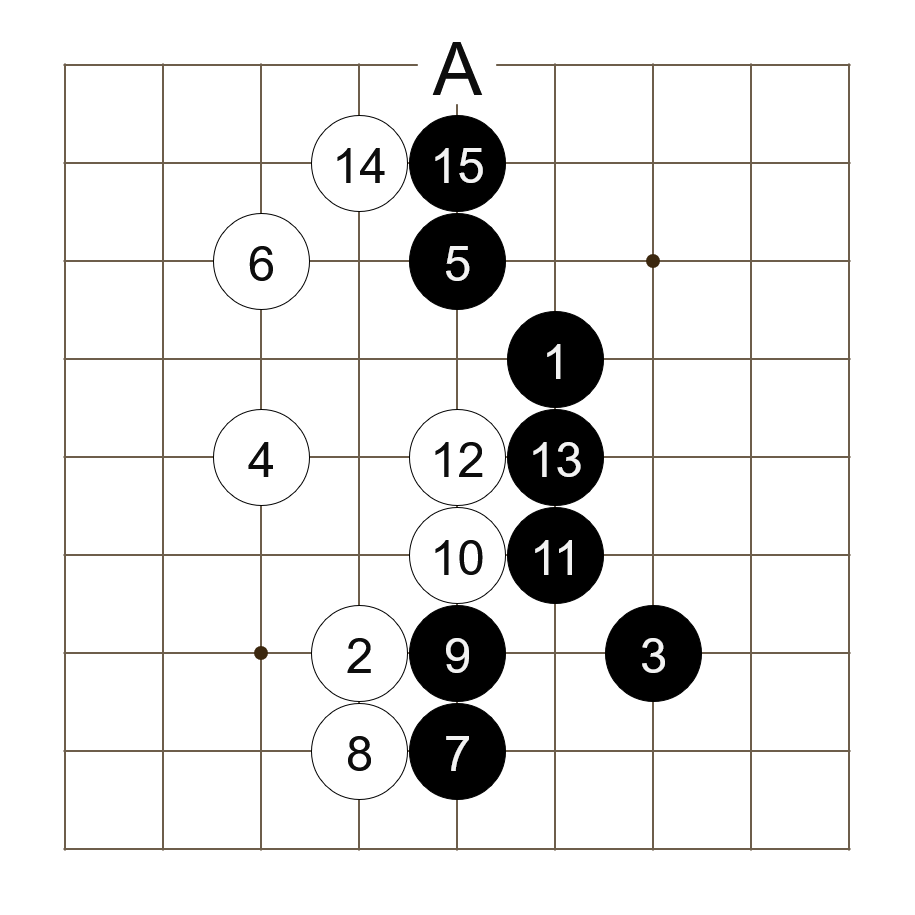
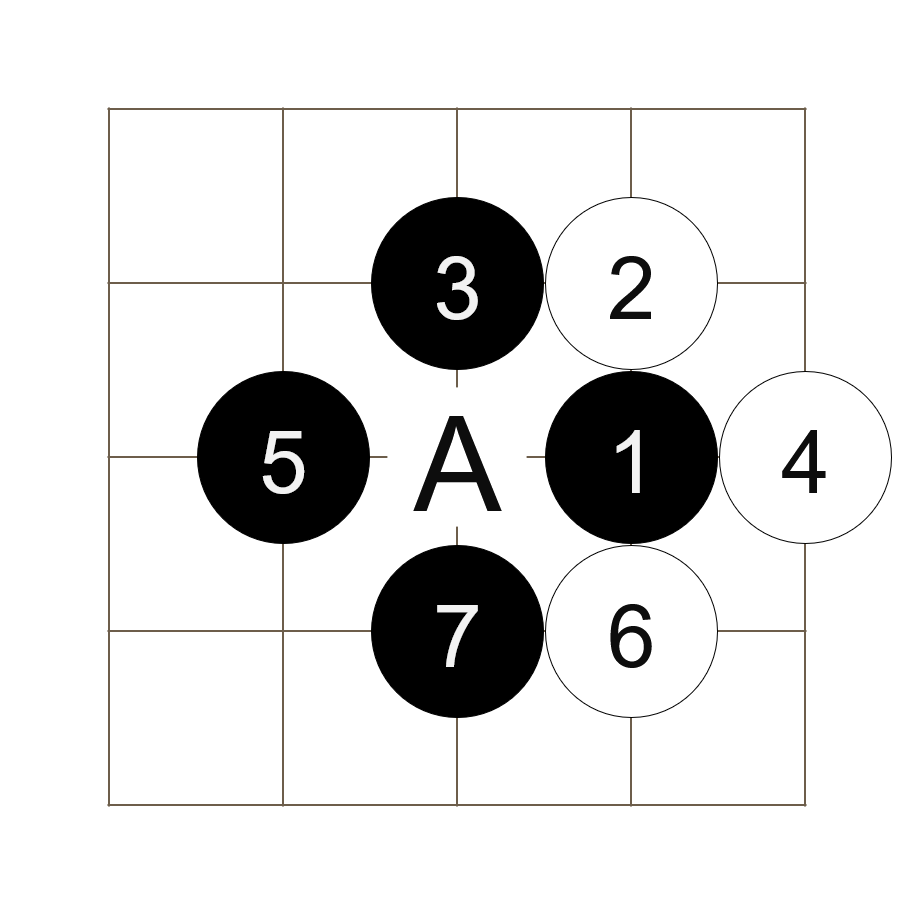
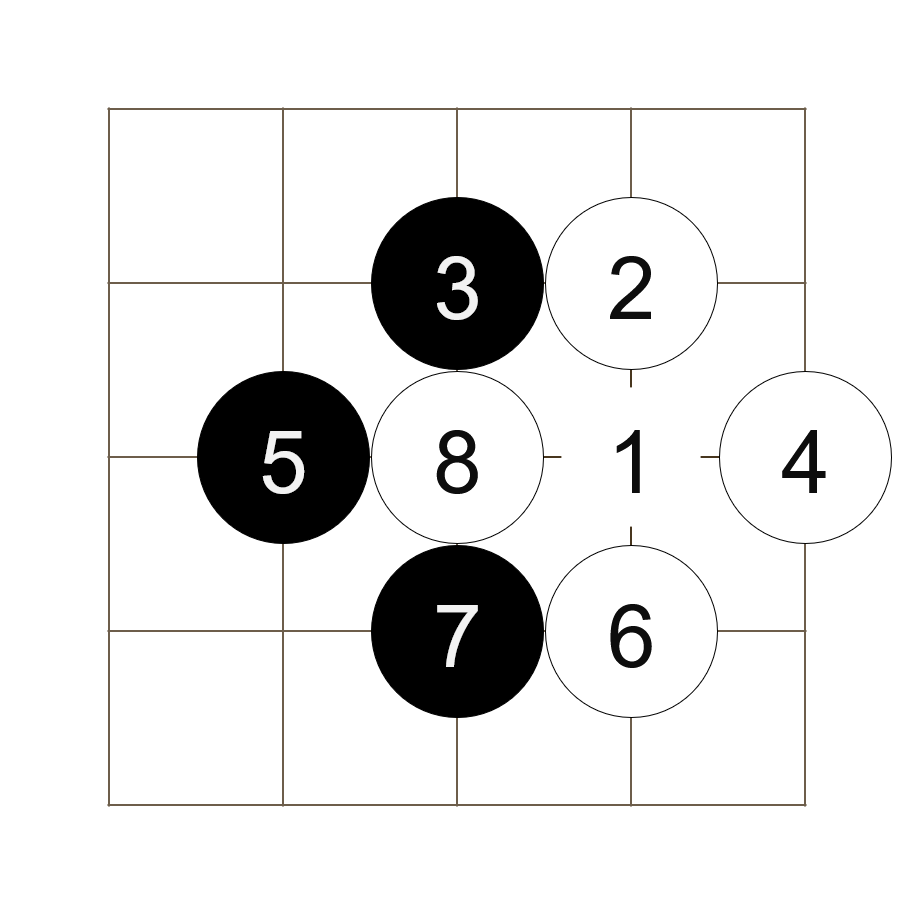
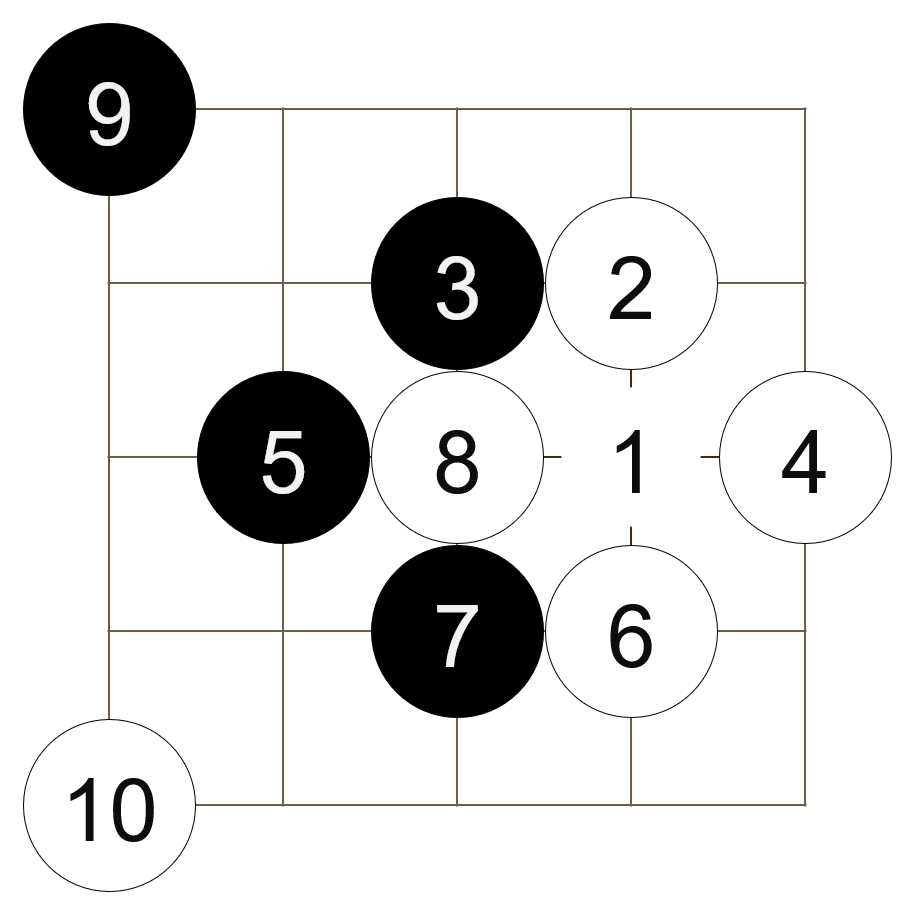
White initiates this time and black needs to respond at 'A'.
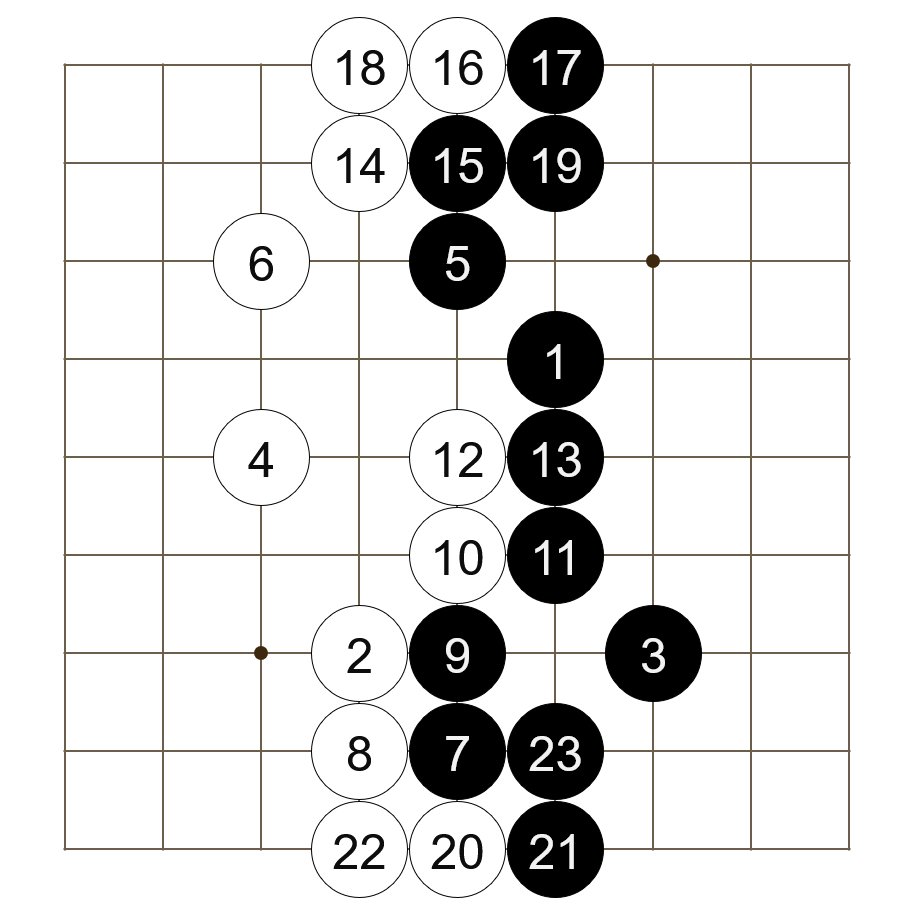
16 to 19 are an important standard sequence to remember. 20 to 23 are the same; if black had not defended, white would sneak into their territory.
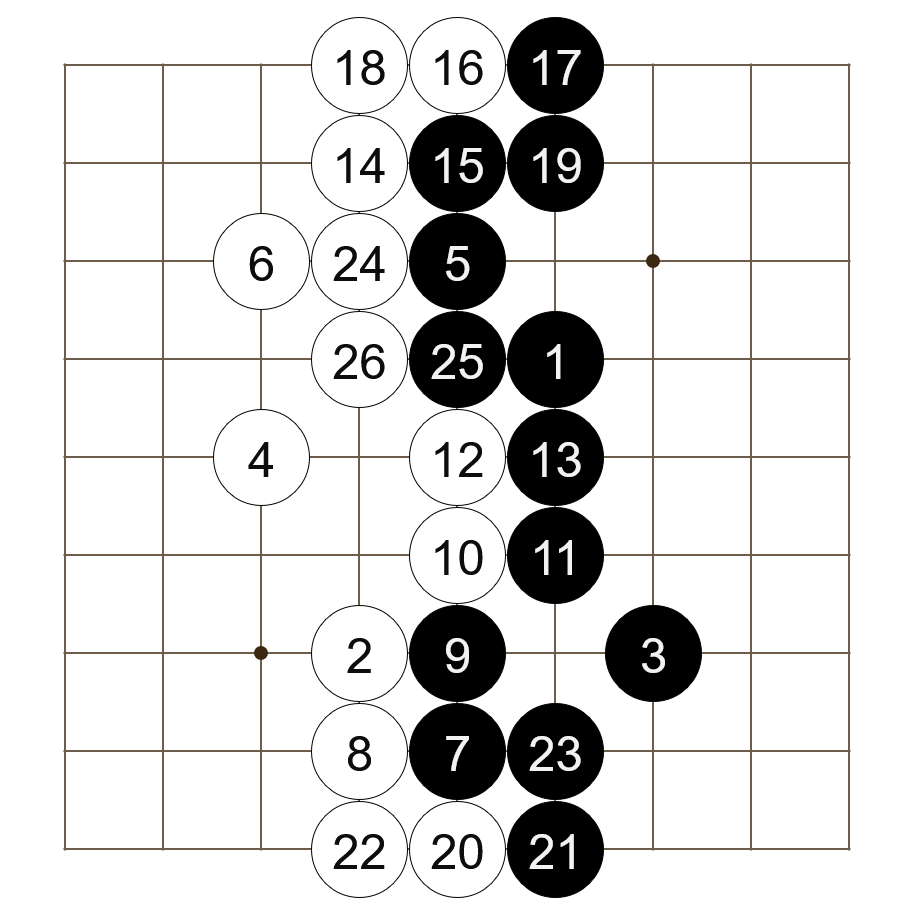
The borders are closed and both players choose to pass once they don't have any meaningful moves left.
Test Yourself
How many points of territory did white and black achieve respectively?
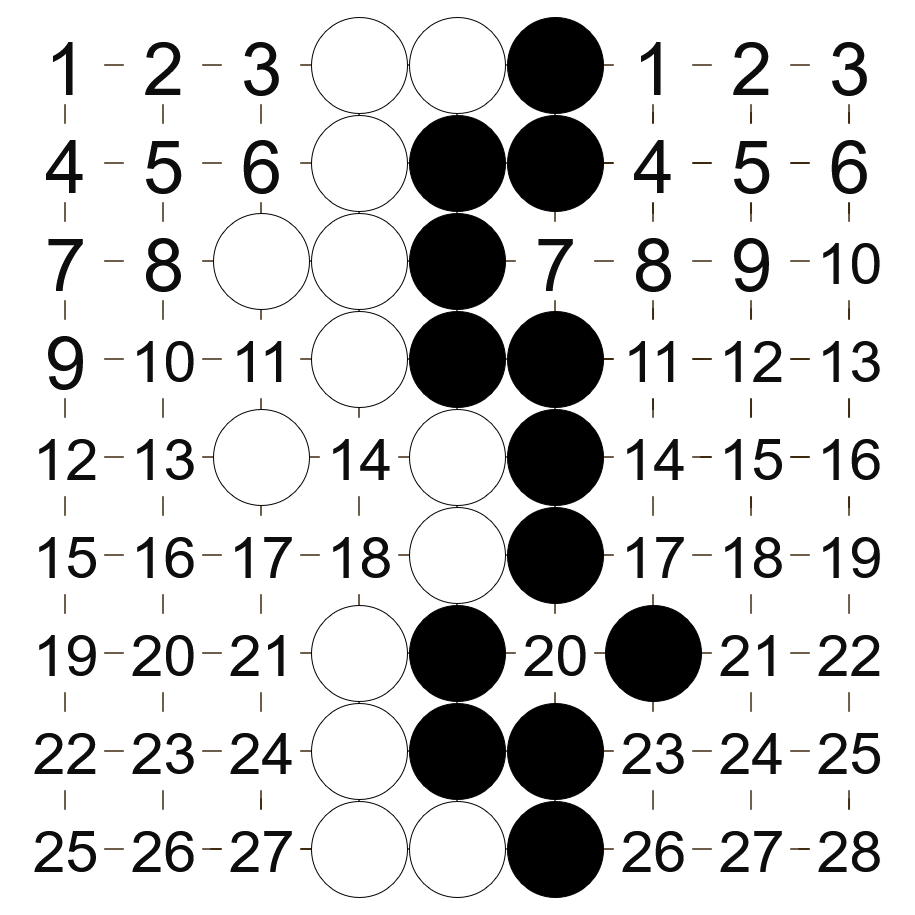 White has 27 points of territory and black has 28.